

My Closed-Door Policy, and Why it Has Made all the Difference
By Jorge Piedra
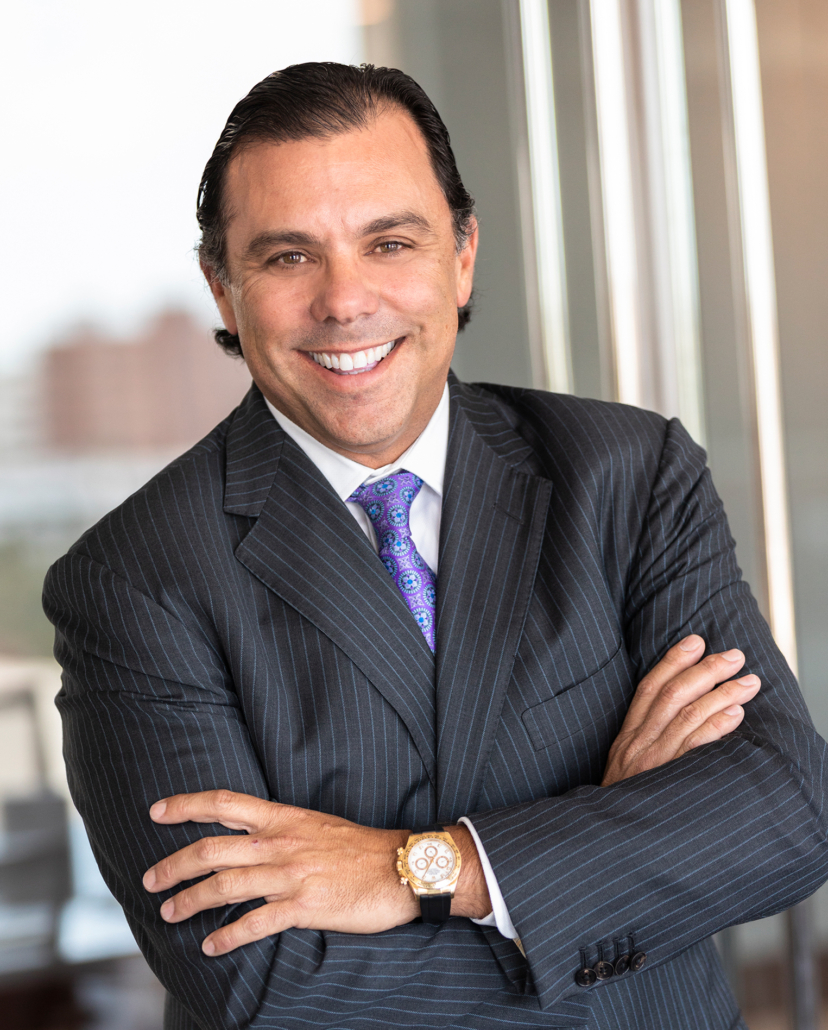 Many thanks to the Daily Business Review and reporter Vivienne Serret for the great story featuring my perspectives on my “Closed-Door Policy” and the benefits it brings to our firm and our clients. I’ve received a lot of interesting feedback on the story (including some very creative memes) so I thought that I would share the article that I wrote (but never published) which led to the story.
First, some background: Like most trial lawyers, whenever I am not in court or in a deposition, by the time I arrive at the office (and I try to get in early) I already have an overwhelming list of tasks to complete – even before the day’s e-mails start flooding in. While attending the DBR’s recent “Managing Partner of the Year” awards presentation, I realized that my approach to this common problem might be different.
That evening, as I read the nominees’ glowing bios and listened to their long speeches, I was sure there was zero chance I would win. In addition to coming from much bigger law firms, these managing partners all touted “open-door” policies and how they encouraged anyone to enter their office anytime – a popular practice I’ve not only disliked, I’ve made a point to prohibit.
Listening to them, I kept asking myself: “How do these managing partners do it? Do they really have an open-door policy, or is that marketing hype? How do they get any work done?” I know the degree of focus that success at complex litigation requires, and I could not imagine allowing anyone to waltz into my office and interrupt me whenever their heart desired.
So, I will say the quiet part out loud, and verbalize what many others have probably thought but were too afraid to express. Here are the facts: For many years, even going back to when I ran my own law firm before I joined Kozyak Tropin & Throckmorton in 2019, I implemented the exact opposite: a “Closed-Door Policy.” I purposely write it here in capital letters, because I am suddenly convinced it needs to become a “thing.” Back in the day, lawyers, paralegals, and assistants would line up at my door, all waiting to talk to me. My assistant joked that it was like the deli at a grocery store, and she was responsible for handing out tickets.
Imagine this: I would be on a call (pre-Zoom) and someone would walk in and sit across from me, and stare at me as I spoke on the phone. Another one waiting outside. And perhaps another one waiting after that one. I did the math: Here are one, two, and maybe three people just waiting around. Not working on their cases. Not attending to our clients’ needs. Not advancing the goals or the mission of our practice in any way. Meanwhile, I would lose concentration on my call or try to rush through it. Not a good scenario for anyone – neither for me, nor my clients, nor the people waiting to ask me questions.
Just as bad was when someone would walk in as I was reading or writing something. A total interruption that I call a “highjack” — as in, you just highjacked my time. I would lose my train of thought and later have to spend more time trying to remember whatever I was thinking. As they were talking to me, I could barely hear what they were saying because I kept wondering: ”Could this really not wait until I was free?” I was notorious for answering questions and making decisions without even remembering the conversation. Funny, but true.
I want to make this clear: While it may not sound this way from this article, I try my best — day in and day out — to be a good mentor, colleague and friend. My motivation for a closed door, truly, is that I want to do what’s best for everyone – which includes nurturing the professional growth, personal empowerment and independent thinking of my colleagues.
At KTT, as well as in my prior life at my own firm, the role of managing partner is not ceremonial. It is a real job where important decisions must be made. Always. In addition, at KTT as well as my own firm before, I chose to be a practicing lawyer with a full load of cases. Because I love managing, and I love lawyering, and I love that I get to do both at such a high level.
But as a result, most of my day is scheduled. It has to be. And clients pay me to read, analyze, think, write and prepare. It is impossible complete to these tasks effectively if you are having constant interruptions. It is also a waste of resources for lawyers to stand around waiting to talk to me or anyone else.
So, here’s what I do. I always set aside an hour a day to speak to anyone who needs to speak to me when I can give them my undivided attention – if more time is needed, I will set it aside, but beyond that, my door is closed. And most people know not to knock, although I am fascinated by how some people think this policy does not apply to them or that their “minor” interruption does not count. I would love to have my door open, but the temptation to stick your head in and ask how my weekend was is too great for some. The policy is simple: if you need to speak to me, send me an e-mail and I will schedule time and you will get my undivided attention. If it is urgent, send me a text. If you want to know how my weekend was, ask me in the breakroom at lunch or in the elevator, or during the hour that I set aside every day to speak with anyone who needs it. My colleagues know not to walk into my office or knock on my door if it is closed, unless they have an appointment. However, once they are meeting with me, they get my full and undivided attention – and I go out of my way to ensure their questions are not only answered but that they’ve come away better equipped to perhaps handle the next one on their own. To be clear, I’m not against collaboration and conversation – I’m against the rampant misuse of time that has largely become known as an open-door policy.
At the end of the day, if you enjoy an open-door policy, by all means go for it. Or if you enjoy a partially open-door policy, you should go for that, too. Perhaps you are better at time management and multi-tasking. My point is: I like my door closed, and that’s how it is going to stay. Since the article was published, I learned that there is a retired managing partner of a major firm who had a similar policy. He told me that he had an open-door policy before 8 a.m. and after 6 p.m. on weekdays and all-day Saturday. I’m sure we can’t be the only ones who feel this way. If so, feel free to reach out so we can grab a coffee (scheduled of course) and exchange war stories – who knows, we may join forces and start the “Closed-Door Club.”